
Bilingual Meltdown, Big Feelings
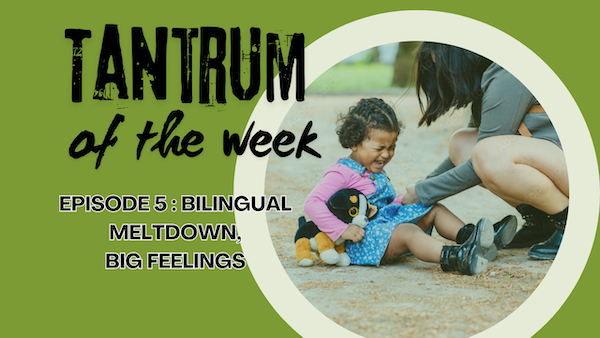
A six-year-old shouting “I don’t want to talk in Spanish right now!” at the dinner table can feel like a shockwave through a bilingual home. Embarrassment for the parent, confusion for the grandparent, and a rush of big feelings for the child collide in seconds. And underneath the surface is a complicated combination of cognitive demands, shifting contexts, identity exploration, and family expectations. Our latest podcast episode explores how a parent can respond calmly in the moment, how to understand the hidden drivers behind a bilingual tantrum, and how to recast cultural and language goals in ways that feel warm, playful, and sustainable for kids. We focus on practices that strengthen co-regulation, protect belonging, and reduce shame while honoring heritage and the generous impulse to pass on language and culture.
1. Take a Breath Before You Respond
When your child resists speaking Spanish, your first job isn’t to fix it — it’s to breathe.
That pause helps you regulate your own emotions and avoid escalating the moment. Once calm, offer quiet presence rather than a lecture. Co-regulation—sitting nearby, speaking softly, and slowing down—helps your child’s nervous system settle, creating space for reflection and learning.
2. Understand the Hidden Load of Switching Languages
Language switching isn’t just about words—it’s executive functioning in action. After a long day in English at school, pivoting to Spanish at dinner can feel like shifting gears on a hill. Fatigue, social awareness, and identity exploration all play a role. Recognizing that cognitive load helps you frame the behavior as stress, not defiance.
3. Offer Scripts and Tools for Overwhelming Moments
Give your child words they can use under pressure:
“Can I answer in English?”
“What’s that word again?”
“I need a minute.”
Practice these during calm moments so they feel empowered to communicate without rejecting your heritage.
4. Create Playful Rituals Instead of Pressure
Turn expectations into rituals:
A Spanish toast before dinner
A guessing game in Spanish
A bedtime story from Grandma
Warm, playful rituals feel like connection; rigid rules feel like pressure. Celebrate effort and curiosity over perfection.
5. Repair and Reconnect After the Meltdown
Once calm, revisit the moment gently:
Acknowledge feelings: “That was hard.”
Reflect impact: “Grandma felt confused.”
Rehearse next time: “Let’s try saying, ‘Can I say it in English first?’”
Keep it brief, kind, and focused on growth.
6. Reframe Resistance as a Sign of Bandwidth, Not Rejection
Your child’s meltdown isn’t a rejection of your culture or love—it’s a sign they’re overwhelmed. When you lead with regulation, reflection, and play, you build a home where language feels safe, joyful, and deeply connected to belonging.
Most important: you’re not alone
All kinds of families have all kinds of differences. If you’re wondering, though, if your family could use some extra support, schedule your free 15-minute phone consultation. We can answer your questions and help you know if we’re the right fit to help!